
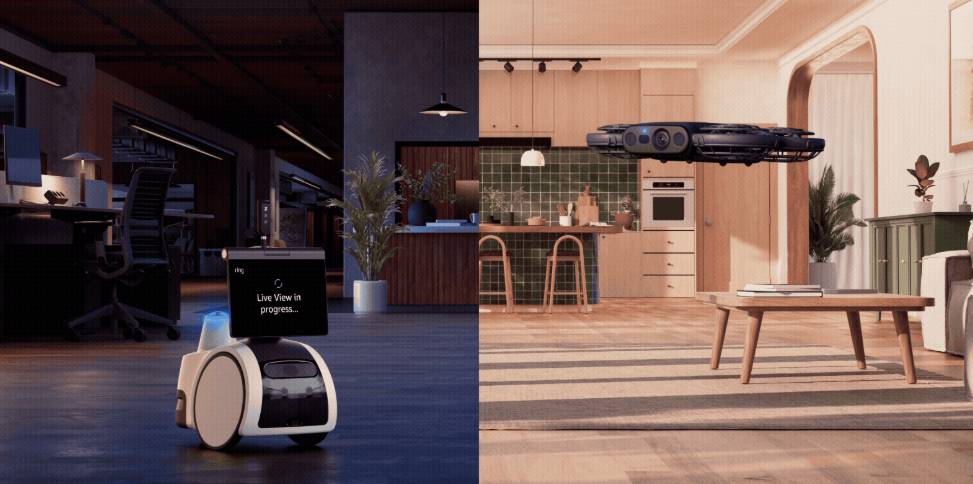
Amazon’s Ring has introduced two autonomous security devices, including a flying camera for homes and a wheeled patrol robot for businesses, expanding its lineup beyond traditional stationary cameras and video doorbells.
The devices, under the new Ring Robotics brand, use artificial intelligence to navigate indoor spaces, follow scheduled patrol routes and investigate alerts from connected security sensors.
The launch also revives Ring’s long-delayed plans for an indoor security drone. The company first introduced its Always Home Cam concept in 2020, but the product never received a widespread commercial release.
Ring Drone Cam Brings Autonomous Security Indoors
The new Ring Drone Cam is designed to fly between rooms, giving homeowners a way to monitor multiple areas without installing separate cameras throughout the house.
Users can create custom flight paths, schedule patrols or launch the device on demand through the Ring app. When a compatible Ring camera, alarm or sensor detects activity, the drone can automatically fly to a predetermined location to investigate.
It captures video in 2K resolution, can rotate to monitor different areas and includes built-in LED lights for recording in darker environments.
The drone operates for up to eight minutes per flight before returning to its charging station. Its camera is disabled while docked, according to Ring.
For commercial environments, the Ring Rover Cam provides similar autonomous monitoring through a wheeled robot rather than a flying device.
Designed for offices, warehouses and retail spaces, Rover Cam can map and patrol indoor areas covering up to 5,000 square feet. Its camera can rise above counters and shelves, helping it monitor areas that stationary cameras might miss. The device can also scan its surroundings and record video in up to 4K resolution.
The robot includes a siren, warning lights and two-way audio, allowing business owners to respond remotely when suspicious activity is detected.
AI Navigation, Privacy and Availability
Both devices use Ring’s AI Pilot technology to map indoor spaces, recognize obstacles and move around rooms without constant human control.
The system identifies rooms and suggests locations for patrols, while allowing users to customize routes and monitoring points. Unlike conventional security cameras, the robots can physically move toward areas where an alert has been triggered.
The increased mobility also raises privacy considerations, particularly for cameras that can travel through private homes and workplaces.
Ring says both devices have visible recording indicators and include encryption designed to protect video footage. The Drone Cam stops recording when docked, while Rover Cam includes a privacy mode that retracts its camera and disables monitoring.
The Rover Cam is available for preorder in the United States for $999.99, with shipments scheduled to begin December 16, 2026.
The Drone Cam is priced at $249.99 and is expected to begin shipping in late January.
Certain features, including scheduled patrols and video history, will require a compatible Ring Protect subscription.
Although their real-world performance remains to be established once they reach customers, Ring aims to bring autonomous technology into everyday security systems.
Leave a Reply