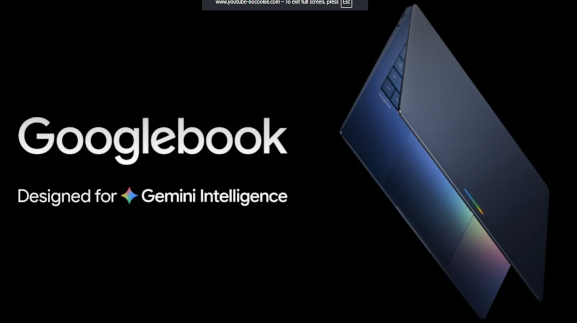
Google has introduced more details about Googlebook, a new laptop platform built around Android, Chrome and the company’s Gemini AI technology.
The first Googlebook models will be made by Acer, ASUS, Dell, HP and Lenovo. Unlike Chromebooks, which are centered on ChromeOS, Googlebook is designed to bring Android apps, phone connectivity and AI tools into a more traditional desktop computing experience.
Built to work closely with Android phones
A major part of Googlebook is its connection with Android smartphones.
Users can access supported phone files and photos from the laptop, continue certain activities started on a phone, and interact with phone apps from a desktop window.
For example, someone could begin a task on an Android phone and later continue it on a Googlebook without manually moving files between the two devices.
Some of these features will require a compatible phone running Android 17 or later.
Googlebook also includes the desktop version of Chrome, with support for browser extensions, alongside apps available through Google Play.
Gemini is integrated into everyday laptop tasks
Google is also building Gemini directly into the Googlebook interface.
One feature, called Magic Pointer, lets users bring up Gemini while working with information already displayed on the screen. Google says it can help with tasks such as translating text, creating calendar events or working with selected images.
Another tool, Rambler, is designed to turn spoken ideas into organized written content. Rather than only converting speech into text, it can structure notes into sections, lists and action items.
Googlebook also includes Create My Widget, which allows users to describe the type of information panel they want on their desktop. Gemini can then generate a custom widget using information from supported sources.
Availability for individual AI features may depend on factors including language, region and account eligibility.
Premium hardware from major PC makers
The first Googlebook laptops start at $899 and use processors from Intel or Qualcomm.
Google says the systems include dedicated hardware for AI processing, with neural processing units capable of at least 45 TOPS. TOPS, or trillions of operations per second, is commonly used to describe the processing capacity of chips designed for AI workloads.
Depending on the model, buyers can get features such as OLED touchscreens, 16GB of memory and 512GB of storage.
Googlebook devices also include an exterior light strip called the Glowbar, which can display charging status, startup animations and visual feedback when Gemini is being used.
Googlebook also includes an isolated Linux environment with terminal access. This allows developers to run Linux-based development software and command-line tools without replacing the main operating system. Google says the environment uses virtualization technology designed to keep Linux workloads separated from other parts of the system.
Security features also draw from technologies used in ChromeOS, including Google Titan security hardware and on-device protections.
Google says Googlebook devices will receive software updates for up to 10 years. The first models from Acer, ASUS, Dell, HP and Lenovo are scheduled to reach U.S. stores on October 4, with availability in several other countries beginning October 5.
Leave a Reply